
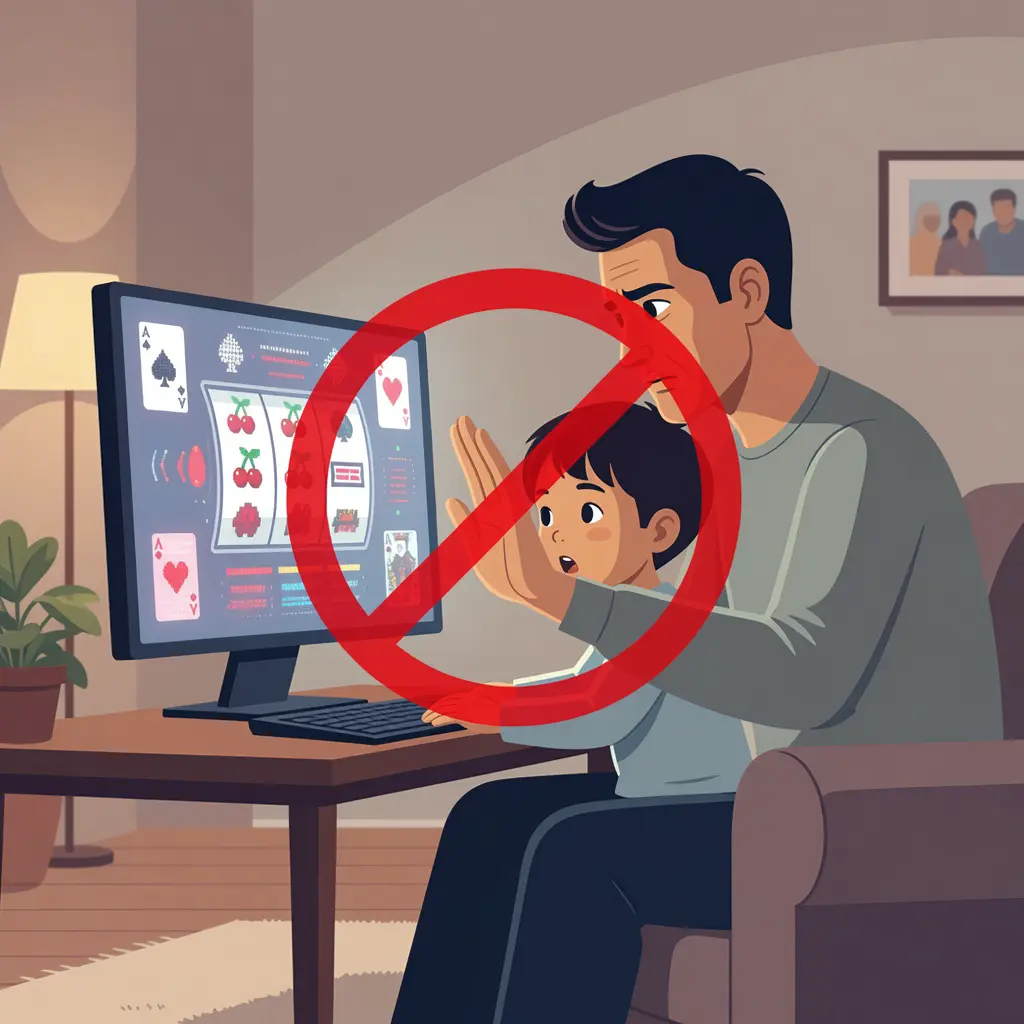
When Gambling Ads Find Their Way Into Family Conversations
Any parent who spends time in online family forums and parenting communities knows how quickly the digital landscape can throw unexpected content your way. One moment you're scrolling through advice about managing a toddler's bedtime routine, and the next you notice your child looking over your shoulder at a link that clearly wasn't designed with families in mind. The internet is a genuinely wonderful resource for parents and children alike — connecting us to communities, educational tools, and expert advice — but it's also a space where commercial interests don't always align with the values we're trying to teach our children at home.
This is a conversation that comes up repeatedly in parenting forums and children's safety communities across the web. Families report stumbling onto promotional links for online gambling sites tucked inside everyday content: buried in comment sections, shared through social media, or embedded in articles about completely unrelated topics. If you've found yourself in this situation, you are far from alone, and you are right to be curious — even cautious — about what these links are and what they mean for your family's digital wellbeing.
The phrase that often appears in these links — casino bonus bez vkladu — is Czech for "casino bonus without deposit," a common promotional tactic used by online gambling platforms to attract new players. These promotions allow someone to try gambling without putting any of their own money down first, which sounds innocuous on the surface but is specifically designed as an engineered entry point into real-money gambling. Understanding what you're looking at is the first and most important step toward protecting your family from content that simply isn't appropriate for children of any age.
This article will walk you through everything you need to know: what these promotions are, why they appear in unexpected places, the particular risks they pose to younger audiences, and — most importantly — the concrete steps you can take right now to create a safer online environment for your entire household. Whether your children are toddlers just beginning to explore tablets, or teenagers with their own smartphones and social media accounts, there are effective protective strategies available at every stage of childhood.

Before diving into protective strategies, it's worth understanding the commercial ecosystem that drives these promotions in the first place. The online gambling industry is enormous — worth hundreds of billions of dollars globally — and competition for new players is extraordinarily fierce. Casinos spend significant resources on affiliate marketing programs, which means that third-party websites earn commissions for every visitor they successfully refer to a gambling platform. This creates a financial incentive for content creators across the internet to drop gambling links into their work, regardless of whether it's contextually appropriate or whether the audience is primarily families.
Decoding the Language of Online Casino Promotions
What "Bez Vkladu" Means and Why It Is Designed to Hook
The phrase "bez vkladu" (without deposit) is the cornerstone of what the industry calls a no-deposit bonus, one of the most powerful acquisition tools in the online gambling marketing playbook. Unlike traditional welcome bonuses that require a player to put money in first, a no-deposit bonus lets someone start playing — and potentially winning — without any upfront financial commitment. For an adult who has made an informed, autonomous choice to gamble responsibly, this is a straightforward promotional offer. For a curious teenager or an impressionable young person who stumbles across such a link, however, the absence of a financial barrier removes one of the few natural deterrents that might otherwise cause pause before engaging with real-money gambling content.
To understand the full landscape of how these promotions work and why they're structured the way they are, you can consult detailed casino selection guides that break down the psychology behind bonus structures in depth — though these resources are, of course, written for adults making informed choices. The key takeaway for parents is that no-deposit bonuses are engineered to minimize every possible barrier to entry. Every design element — from the lack of financial requirement to the colorful, gamified interfaces and celebratory sound effects — is crafted to make starting feel effortless, exciting, and safe.
- Free spins bonuses: Allow new users to spin slot machines without spending their own money, providing an immediate taste of the gambling experience
- Free play credits: A small amount of virtual currency credited automatically to a new account upon registration
- No-deposit cash bonuses: Small real-money amounts added to a fresh account without requiring an initial payment
- Trial periods: Time-limited access to games without any financial commitment required
- Referral bonuses: Rewards given when existing players recruit new users — a mechanism that actively drives viral sharing through social networks
Each of these formats is carefully calibrated to create a positive, exciting first experience that encourages continued engagement. Gambling companies understand the psychology of reward systems at an extremely sophisticated level, and they apply this knowledge to structure offers that feel thrilling and low-stakes simultaneously — precisely the combination that makes them appealing to younger users who lack the life experience to evaluate long-term risk or recognize manipulative design patterns.
How These Links Spread Into Everyday Family Spaces
Understanding why gambling promotions appear in unexpected, non-gambling contexts requires understanding how affiliate marketing networks function across the modern web. When a casino or gambling platform wants to expand its player base, it doesn't limit its advertising to gambling-specific sites. It creates an affiliate program that pays commission to any website owner who successfully drives a new registration. This means ordinary blog posts, forum comment sections, product review sites, parenting communities, and even children's educational platforms can end up hosting gambling links — not necessarily because the site owner endorses gambling, but because someone in the community posted a link for financial gain, or because a legitimate site was infiltrated by spam accounts.
This is exactly why our online gambling safety guide recommends that parents take time to understand how these distribution systems work — because once you grasp the mechanism behind the spread, you're far better equipped to spot these links before your children do, and to have genuinely informed conversations about them when your children inevitably encounter them in the wild.
Social media platforms present a particular ongoing challenge in this regard. Algorithms designed to maximize engagement can sometimes amplify gambling-adjacent content in unexpected ways, and even carefully curated family-friendly groups can be infiltrated by spam accounts sharing promotional links. Search engines can also surface gambling content when users search for terms that superficially resemble gambling keywords — which is precisely how many parents find themselves looking at a casino promotion link when they were searching for something entirely different and unrelated.
The Real Risks for Children and Teenagers
How Early Gambling Exposure Shapes Young Minds
The research literature on children and gambling exposure is genuinely sobering for parents who care about long-term outcomes. Studies consistently demonstrate that early exposure to gambling content significantly elevates the likelihood of developing problematic gambling behaviors in adulthood. The adolescent brain — still actively developing its capacity for impulse control, risk assessment, and long-term thinking — is particularly susceptible to the psychological hooks deliberately built into gambling experiences. The combination of variable reward schedules (the neurological excitement of unpredictable wins), social elements, and the near-miss effect creates patterns of neural activation in young people that can establish durable behavioral tendencies long before any conscious decision to gamble is made.
Experts in gambling harm prevention note that the normalization of gambling language and imagery is itself a meaningful risk factor, even before any actual gambling activity takes place. When children grow up seeing gambling promoted casually — in the same digital spaces where they encounter entertainment, sports content, and social connection — it gradually becomes part of their mental model of normal life. You can find detailed information about exposure risks and current research findings https://czkasino.cz/ from organizations that specialize in gambling harm prevention. Reviewing this material as a parent gives you both factual grounding for conversations with your children and practical context for appreciating the urgency of proactive digital safety measures.

It's important to distinguish between different levels of risk and different age groups when assessing the situation in your own household. A seven-year-old who accidentally clicks on a casino link and sees a roulette wheel is in a different situation from a fifteen-year-old who creates an account using false age information and begins engaging with real-money games. Both situations warrant parental attention and response, but they call for meaningfully different approaches. The protective strategies you deploy should scale thoughtfully with your child's age, digital literacy, and specific online environment.
Warning Signs and Risk Indicators to Monitor
Parents frequently ask what behavioral or digital warning signs might suggest their child has had more than casual or accidental exposure to gambling content. The following table summarizes key indicators across different age groups, what they might suggest about the level of exposure, and the most constructive responses available to parents in each case.
| Age Group | Warning Signs | Possible Meaning | Recommended Response |
|---|---|---|---|
| Ages 6–10 | Talking about "free games" involving winning money; mentioning casino games by name | Has encountered gambling content online or through peers | Gentle, curious conversation; reinforce device protections; check browsing history together |
| Ages 11–13 | Interest in "free bonus" apps; increased solo online time; asking about cryptocurrency | May be independently exploring gambling-adjacent content | Open discussion about why gambling is for adults; review app permissions and browser settings together |
| Ages 14–17 | Increased device secrecy; unexplained small sums appearing or disappearing; anxiety when offline | Possible active engagement with gambling platforms or communities | Direct, honest conversation; consider professional support if needed; implement firm but respectful device policies |
| All ages | Gambling-themed language entering everyday speech; preoccupation with "winning" across contexts | Normalization of gambling concepts through repeated content exposure | Increase media literacy conversations; adjust content filters; review social media accounts and follows |
This table is a starting point and a framework, not an exhaustive diagnostic tool. Every child is different, and warning signs will manifest differently depending on personality, peer group dynamics, and home environment. What matters most is maintaining genuinely open lines of communication so your children feel safe approaching you when they encounter confusing or concerning content online, rather than exploring it privately or asking peers who may have equally little guidance to offer.
Building a Shield: Practical Parental Controls and Safety Measures
Device-Level and Network-Level Protection
The good news for parents navigating today's digital safety landscape is that the tools available are genuinely powerful, and many are free. A layered approach to protection — combining device settings, browser controls, and network-level filtering — provides far more robust coverage than any single solution could. The key is understanding what each layer protects against and ensuring you don't have gaps in your coverage that a determined teenager could exploit, which they invariably will try to do if motivated.
- Enable and lock SafeSearch on all browsers: Most major browsers offer built-in content filtering. On devices your children use, SafeSearch should be locked — not just enabled, but password-protected so it cannot be disabled without your involvement.
- Use a DNS-level content filter: Services like Cloudflare for Families or OpenDNS filter content at the network level, working across all devices on your home Wi-Fi regardless of which browser or app is in use.
- Set up dedicated child accounts on shared devices: Major operating systems including Windows, macOS, iOS, and Android all offer child accounts with restricted access and parental oversight tools. Use these rather than sharing your own account credentials.
- Review and restrict app permissions regularly: Many apps that appear to be harmless games contain in-app purchase mechanisms, advertising for gambling-adjacent products, or social features that expose children to peer-shared gambling links.
- Enable your router's built-in parental controls: Most modern routers include time-based restrictions and content category blocking that applies to every connected device in the house, including smart TVs and gaming consoles.
- Install a dedicated parental control application: Products like Qustodio, Circle, or Bark offer granular monitoring and control, including real-time alerts when specific content categories are accessed.
- Enable YouTube Restricted Mode: YouTube is among the most common platforms through which children encounter unexpected content. Restricted Mode should be enabled and password-protected on all children's accounts and shared family devices.
No technical solution is foolproof, and determined teenagers in particular will often find workarounds — switching to mobile data instead of home Wi-Fi, borrowing a friend's unlocked device, or using a VPN service. This is precisely why technical controls must always be paired with open conversation rather than treated as a complete, stand-alone solution. Parental controls reduce casual and accidental exposure and buy time for your children to develop better judgment; they don't replace the deeper, more durable work of building your child's own critical thinking and values around digital content.
Having Conversations That Actually Land
Research consistently shows that children who have open, non-judgmental conversations about risky online content with their parents are significantly less likely to engage with that content secretly. The goal is not to make gambling seem terrifying or exotically forbidden — that approach tends to backfire by making the topic more alluring — but to give your children an accurate framework for understanding what gambling is, why it is designed for adults, and why the marketing around it is specifically engineered to feel appealing to everyone, including young people who shouldn't be engaging with it. For broader digital parenting strategies, our article on managing screen time offers practical conversation frameworks for talking about online content in ways that build trust rather than triggering defensive silence.
Age-appropriate honesty is the most powerful protective tool available to parents. You don't need to be an expert on gambling psychology to have a helpful conversation — you simply need to be willing to acknowledge that the world contains things designed to make money from people, that some of those things are appropriately off-limits for children for well-documented reasons, and that your home is a place where your child can ask questions without fear of judgment or disproportionate punishment.

When your child does encounter a gambling link — and in today's internet environment, they almost certainly will at some point — your response to that first conversation will set the tone for every subsequent one. Staying calm, avoiding blame, and being genuinely curious about what your child encountered and how it made them feel will keep the lines of communication open. Reacting with alarm or imposing immediate punishment tends to teach children to hide future encounters rather than bring them to you, which is the opposite of what protective parenting requires.
Creating Long-Term Digital Resilience for Your Family
Building Media Literacy From the Ground Up
Protection from gambling content is really a meaningful subset of a broader and more fundamental skill: media literacy, meaning the cultivated ability to recognize, evaluate, and critically engage with the commercial and persuasive intentions behind digital content. Children who genuinely understand that websites make money from their attention and clicks — and who can identify when content is specifically designed to influence their behavior toward a commercial outcome — are better protected not just from gambling promotions, but from the full spectrum of manipulative digital content they will encounter across their entire lives.
Start building media literacy early, with age-appropriate conversations about advertising, sponsorship, and why so many things online appear to be completely free. Even young children can grasp the basic concept that "when something is free, there is usually another form of payment involved" — meaning that platforms provide free access in exchange for attention, behavioral data, or eventual conversion to paying customers. Expanding this concept to include the understanding that some apparently free offers are specifically structured to lead to paid engagement — which is precisely what a casino bonus bez vkladu is designed to accomplish — gives older children a practical and transferable framework for evaluating the promotions they will inevitably encounter throughout their digital lives.
Establishing Family Digital Agreements
One of the most effective long-term strategies for families navigating the online world together is establishing clear, collaboratively developed family digital agreements: documented conversations that explicitly articulate the expectations, boundaries, and shared values your family holds around internet use. Rather than functioning as a list of prohibitions handed down from parent to child, these agreements work best when children are meaningfully involved in their creation — giving them genuine ownership over the rules and making it significantly more likely they will honor them in practice.
A thoughtfully developed family digital agreement might cover the following areas:
- Which devices can be used in which rooms, and at what times (no smartphones in bedrooms after a set hour is a common and evidence-supported boundary)
- What to do immediately when you encounter unexpected, confusing, or upsetting content online
- Which platforms and apps are approved for use, and at what minimum ages
- How family members share concerns about online content without fear of punishment or judgment
- Expectations around sharing personal information or clicking on unfamiliar links from unknown sources
- How digital time is balanced thoughtfully against other activities: outdoor play, in-person socializing, homework, and family time
- The mutual understanding that parents will periodically review browsing history — not as surveillance, but as responsible oversight similar to knowing where children are physically
Revisiting your family digital agreement annually — or whenever a significant new device, platform, or life stage enters your household — keeps it genuinely relevant and gives you a natural, low-pressure opportunity to have updated conversations about emerging digital risks, including gambling content, as your children grow and their online environments evolve in complexity.
Conclusion: Your Family's Digital Safety Is Worth the Investment
Stumbling across a casino bonus link in a family forum or parenting community is disorienting, and the instinct to shield your children from gambling content is both well-founded and entirely achievable with consistent effort. The online gambling industry is large, well-funded, and sophisticated in its marketing tactics — but so are the tools and knowledge available to parents who commit to creating safer digital environments for their families. Understanding what these promotions are, why they appear in unexpected and seemingly family-safe spaces, and how they are specifically engineered to minimize psychological resistance to engagement is the intellectual foundation you need to address them effectively and without panic.
The practical steps outlined throughout this article — from DNS-level filtering and dedicated child accounts to media literacy education and open family conversations — work best when combined into a layered, evolving strategy that grows alongside your children. No single measure will protect a determined teenager from every piece of inappropriate online content, but a household culture built on openness, ongoing communication, and shared values creates a form of resilience that no technical filter alone can replicate. Your children will one day be adults navigating the internet entirely independently; the goal is not to shield them from every risk forever, but to give them the judgment, media literacy, and internalized values to navigate those risks wisely on their own. Start those conversations today, implement the technical safeguards appropriate for your children's ages and circumstances, and revisit everything periodically as your household grows and changes. The investment you make in your family's digital safety today pays dividends that extend far beyond the specific issue of gambling content — building the trust, communication, and lasting resilience that will serve your children across every dimension of their lives.



Comments
I didn’t realize how easily these casino links could slip into family forums; it’s kind of scary thinking a curious kid could click on one without any real barrier.
I hadn’t realized how easily a “bez vkladu” link could pop up in a parenting forum; it makes me rethink letting my kids use devices in shared spaces without supervision.
I never realized how easily these gambling links slip into family forums. It’s worrying to think a casual scroll could expose kids without any obvious warning.
The DNS-level filter tip caught my eye—if kids switch to mobile data, does Cloudflare for Families still help at all, or do you need to set something up on each phone too?
The part about using a DNS-level filter like Cloudflare for Families sounds smart, but does it still help when my teen switches to mobile data instead of our home Wi‑Fi?